Pre-Health Pathways at Two CUNY Colleges: Hunter and City College
Introduction
Many students are often surprised to hear that pre-med is not a major one can declare in college. It is actually a pathway that students of any major can pursue — if they are interested in a health science related field. Pre-Med pathways, also known as “pre-health” pathways, are essential for students who are unfamiliar with what it takes to get into medical school or any other professional degree program since they provide a framework to help students become the most competitive applicants they can possibly be to increase their chances of acceptance to professional degree programs such as medical school.
Across CUNY, an estimated 50,000 students are enrolled in “Health and Human Services” programs. The City College of New York (CCNY) was founded in 1847 and Hunter College, founded in 1870, making them the two longest established colleges at CUNY. This article will discuss the different pathways to medicine freshmen and attending students as well as individuals interested in enrolling in Post Baccalaureate programs can pursue at CCNY and at Hunter in hopes of deciding between these two institutions to make more informed decisions.
Admissions and Application Process
Hunter College
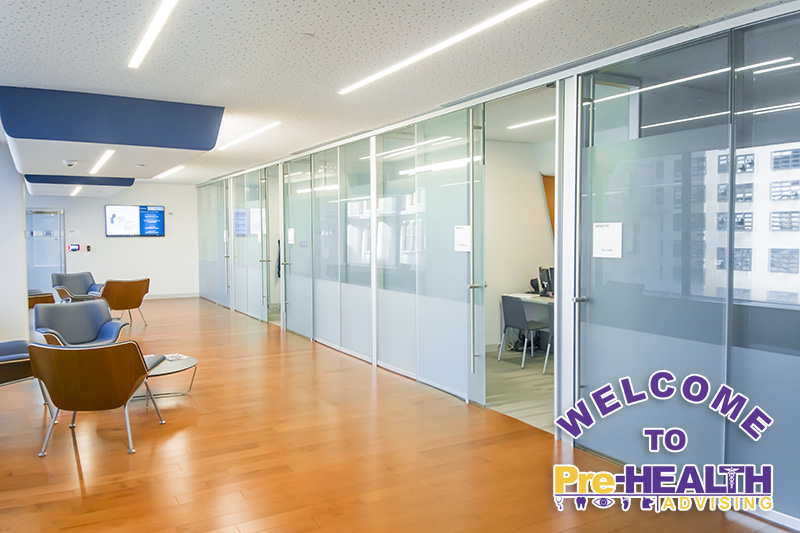
Hunter College offers support and guidance through their Pre-Health Office for undergraduate and post-baccalaureate students aiming for careers as doctors, dentists, optometrists, podiatrists, veterinarians, and certain allied health professions (physical therapy, physician assistant, pharmacy, occupational therapy). Hunter offers a Health Professions Advising Program (HPAP) that is structured to aid students through their undergraduate journeys to health professions graduate schools like medical, dental and various others like optometry or veterinary schools.
NOTE: Students interested in nursing are not advised through the Pre-Health advising office. If you are interested in Hunter College’s Nursing Program, seek more info at the Hunter Bellevue School of Nursing website.
For the first step of applying to the Pre-Health Program, you must attend the Pre-Health Freshman Orientation and complete all Pre-Health Professions Advising Pathway (PPAP) 1000 seminars listed on their website or steps required for freshman, which are held on Tuesdays and Wednesdays during the fall and spring semesters. These seminars cover essential topics like study skills, resume writing, professionalism, clinical exposure, research opportunities, and more. After completing the final seminar, “Everything You Need to Know about Being a Pre-Health Student,” you will receive a Pre-Health Contract, Application, and ID Number. Submit the contract and application promptly before your Pre-Health ID expires. Step 2 in applying to the Pre-Health program is to open your Pre-Health File. To do this, attend all PPAP 1002: Healthcare Careers Exploration seminars, offered every spring on Tuesdays and Wednesdays, which introduce various healthcare careers such as nursing, pharmacology, and public health. Complete at least 12 science credits at Hunter with a minimum 3.3 GPA (cumulative and in Biology, Chemistry, and Physics), then submit the Pre-Health File Checklist for review. This file must be opened as a current Pre-Health student at Hunter; seniors and alumni are ineligible. Steps 1 and 2 must be completed promptly to stay on track with the program timeline.
City College
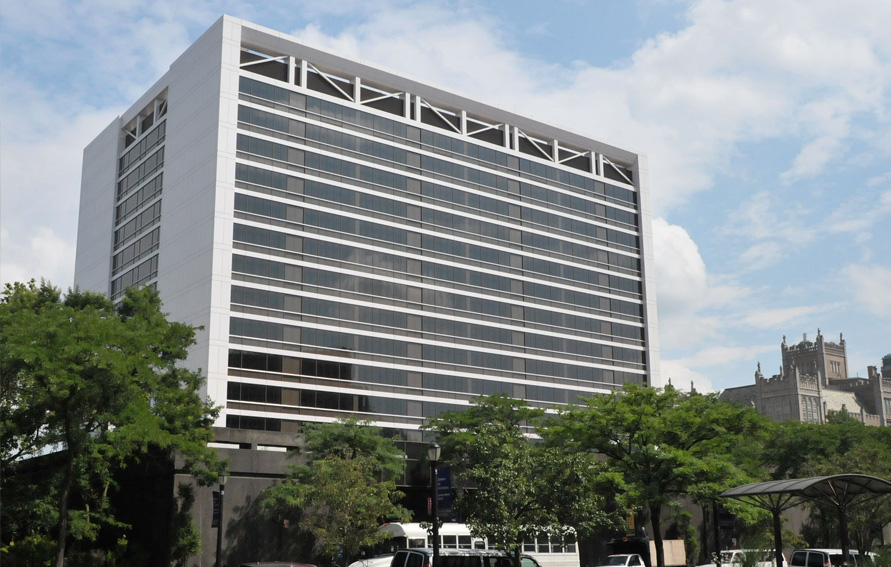
Similarly, the Pre-Health Programat the City College of New York (CCNY) prepares undergraduate and post-baccalaureate students for professional health careers such as medicine, dentistry, and pharmacy through academic advising, tutoring, workshops, and clinical shadowing opportunities. The program also offers support for the application process, including personal statements, interviews, and standardized exams to help them become great candidates for the professional schools they are applying to. According to CCNY, of the students who apply to professional programs, 68-73% of them “are successful in gaining admission to one or more schools.” Those are amazing odds, considering the national medical school acceptance rate ofapproximately 41% in 2022.
To join the Pre-Health Program, students must be enrolled at CCNY, maintain a cumulative GPA of 3.0 as stated on the website. However, in the FAQ section of this page,“Beginning January 2021 and moving forward: undergraduate and post-bac students must have a science GPA (GPA consisting of subjects in Biology, Physics, Chemistry and Math ONLY) of 3.3+ to be eligible to meet with the Pre-Health Faculty Committee for a committee letter.” They must also complete coursework in general biology, general chemistry, and calculus. Freshmen and transfer students can apply directly here, while upperclassmen must meet these prerequisites before applying with this link. Both applications require a one-page, 3-paragraph minimum personal statement responding to the prompt: “Please prepare a personal statement outlining why you are interested in pursuing a career in the health professions. Your statement should be about one page long and contain at least three paragraphs.” Once accepted, students benefit from tailored advising, exclusive opportunities within the Pre-Health community, and regular self-assessment appointments to track their progress to make sure they become the best possible applicants they can be.
City College also provides its students with a detailed chart of all the course requirements for specific health profession schools here.
NOTE: If a Pre-Health student’s GPA drops below 3.0, they will be placed on probation for the following semester, and if they do not reach a cumulative GPA of 3.0, they will be dismissed from the Pre-Health program.
Key Program Differences: Hunter College requires students attain a minimum 3.3 GPA in biology, chemistry, and physics (BCP) in order to be eligible to apply to their Pre-Health program. However, City College does not have this requirement for incoming freshmen, and instead they are required to maintain a GPA of 3.0 at minimum to stay in the Pre-Health program.
Committee Letters: What are they and why are they so important?
A committee letter, often provided by premedical programs at many colleges, is a powerful tool for medical, dental, and optometry school applications. A committee letter is a detailed “profile” that highlights your background, accomplishments, and motivation for pursuing a healthcare career written by the Pre-Health Committee.
At Hunter College, for the 2023-2024 cycle of applications for professional programs, there were 44 medical school, 8 dental school and 1 optometry school applicants, all of which received committee letters and were accepted to their respective programs. These are quite impressive statistics, proving how beneficial committee letters are. Students can review the data at Hunter College’s website. Over the past few years, the rate of committee letter applicant acceptances has continuously increased. Getting a committee letter is discussed later.
City College does not provide any statistics on the application outcomes of committee letter recipients on their website, however, as you can probably already tell, if a committee letter in one CUNY can have such immense impact and can be very selective to obtain, it is most likely very valuable coming from a different CUNY as well.
Hunter Letter Packets
While similar to a committee letter, a Letter Packet differs as it includes a cover letter without summarizing qualifications or offering an official endorsement. Of note, Hunter’s Committee Letter is not available for programs like pharmacy or physician assistant schools but is an invaluable resource for medical, dental, and optometry applicants. Building a strong rapport with your pre med adviser ensures you make the most of this opportunity to shine in your application!
NOTE: Students in the non-degree program at Hunter, defined as “Students take courses without restrictions or minimum credit requirements” are not eligible for advising through the pre-health office. Second-degree students however do, after completing their second bachelor’s degree, contact the Hunter Office of admissions at admissions@hunter.cuny.edu or visit the admissions website.
How to qualify for a Committee letter?
To apply for a Committee Letter at Hunter College, you must meet with a Pre-Health Advisor at least once a year and have an active Pre-Health File. You’ll need to attend PPAP 1003 seminars, including an application planning seminar, and submit required reflection assignments. Competitive MCAT score of 514 for allopathic medicine (88th percentile) 507 for osteopathic (69th percentile) must be submitted by October 30, and you must maintain a minimum 3.45 GPA in BCPM courses and overall. By the January 15 deadline, you’ll need at least 14 evaluative documents in your Pre-Health file, including 6 letters of recommendation, from science faculty, clinical supervisors, research mentors, a non-science faculty member, and a community service supervisor. Plus, you’ll need 8-10 course evaluations, including 3 from science instructors
The requirements to be eligible to receive a committee letter are very demanding and difficult to fulfill, hence why only 53 students applied with committee letters as shown in the previous graphs. For a college known to be very strong for pre-health, you would typically expect more students to get committee letters, but this small number demonstrates how difficult it can be to fulfill the requirements to get a committee letter
At City College, to be eligible for a Committee Letter you must be an official part of the CCNY Pre-Health Program, having submitted your application and met all program requirements as discussed previously. The eligibility criteria are rigorous, ensuring only the most prepared candidates receive this endorsement. Applicants must maintain a minimum 3.3+ science GPA at the time of their application to professional school and submit at least two letters of recommendation to the Pre-Health Office. According to the Committee Letter FAQ page, “Beginning with the 2023 application cycle and moving forward, no student will be eligible for a committee letter with an MCAT score less than 510 for MD (allopathic) and 507 for DO (osteopathic).” For dental school you need a 20 average DAT score, or a 340 OAT for optometry school.
Each eligible student participates in committee interviews conducted by the CCNY Pre-Health Faculty in May and June to assess their readiness and commitment to their chosen field. Some pre-professional programs, such as Physician Assistant and Podiatry, do not require committee letters. Students who do not meet these criteria, such as those who are not officially enrolled in CCNY Pre-Health, or post-baccalaureate students with fewer than 24 CCNY credits are ineligible for a Committee Letter. These strict requirements highlight the challenge of obtaining a Committee Letter, making it a significant accomplishment for those who qualify.
Key Differences: The Committee Letter requirements at Hunter College and CCNY differ notably in their demands.
Hunter requires a higher GPA (3.45 vs. CCNY’s 3.3), a more competitive MCAT score (514 vs. 510 for allopathic schools), and an extensive pre-application process, including annual advisor meetings, seminars, and 14 evaluative documents, such as six letters of recommendation.
In contrast, CCNY requires fewer recommendation letters (two) and focuses on standardized test benchmarks and enrollment in its Pre-Health Program as well as interviews by faculty of the Pre-Health Committee
While both programs are rigorous, Hunter’s emphasis on extensive documentation and higher academic standards makes its process more demanding. However, do not allow this to make you underestimate the difficulty of attaining the requirements for a committee letter at City College as you might complete all the steps, get an interview and still not receive a letter.
Who to contact?
Hunter College – For assistance with pre-health advising at Hunter College, students can visit the Pre-Health Advising Office at 695 Park Avenue, Hunter East Room 710, New York, NY 10065, or call (212) 772-5244. Appointments can be scheduled online and are required for consultations. The advising team includes Kemile Jackson, the Health Professions Advising Director (Room 716), and advisors Nina Ledis (Room 715) and Robert Hieger (Room 714). This information is available at their contact us page.
The office has clear policies to ensure effective scheduling. Students may reschedule appointments once per semester; a second reschedule or cancellation limits them to drop-in advising for the rest of the semester. Missing an appointment without prior notification also results in drop-in advising restrictions. Additionally, arriving more than 10 minutes late is treated as a cancellation. These policies help maintain fair access to advising resources.
City College – For pre-health advising at City College, students can contact the Pre-Health Office located in the Marshak Science Building, Room 1208B, at 160 Convent Avenue, New York, NY 10031. The office can be reached by phone at (212) 650-6622 or by fax at (212) 650-7816. The team includes Program Director and Advisor Belinda G. Smith, MA (email:bsmith@ccny.cuny.edu), and Program Coordinator and Advisor Annieta Brown (email: albrown@ccny.cuny.edu). Students are encouraged to reach out as early as they possibly can in their undergraduate journey for guidance as well as to build a relationship to ensure they are on the right path to becoming competitive candidates for professional health programs. Engaging with the Pre-Health Office early on allows students to take full advantage of the resources and support available to them throughout their academic career.

About the Author
Shakhrizoda Mavlyanova is an editor for the HIPE Ezine, where she creates engaging and informative content about pathways to medicine. Her work aims to broaden awareness and inspire students across CUNY to explore careers in healthcare.